
The integration between AI and crypto is emerging as one of the dominant narratives in the market, driven by the accelerating adoption of AI and the growing need for decentralized computing infrastructure. In this context, a number of AI crypto 2026 projects are starting to show potential worth watching.
Article Summary
- AI x Crypto: The integration of AI with crypto has received a positive response from the market, reflected by the surge in token prices in the AI sector throughout 2024, even if the technology is not yet as developed as it will be in 2026.
- Bittensor: Uses a relatively unique halving mechanism, giving its tokenomics structure its own characteristics. Technically, the price of TAO showed strong rejection at the resistance level, signaling selling pressure at that level.
- NEAR Protocol: NEAR innovates through AI Agent framework and Confidential GPU Marketplace. Technically, the price of NEAR on April 13, 2026 is in the resistance area which has the potential to determine the continuation of the trend if it is successfully broken with strong confirmation.
- Render Network: Render Network has a relevant service as GPUs are getting more expensive due to the development of AI. From a technical perspective, the price of RENDER in April 2026 is at the nearest support level which is important to determine the direction of the next movement.
- Artificial Superintelligence Alliance: A merger of 3 AI crypto projects that aims to build a decentralized AI ecosystem. Technically, the price movement of FET is in the consolidation area.
AI x Crypto: Market Dynamics and Trends
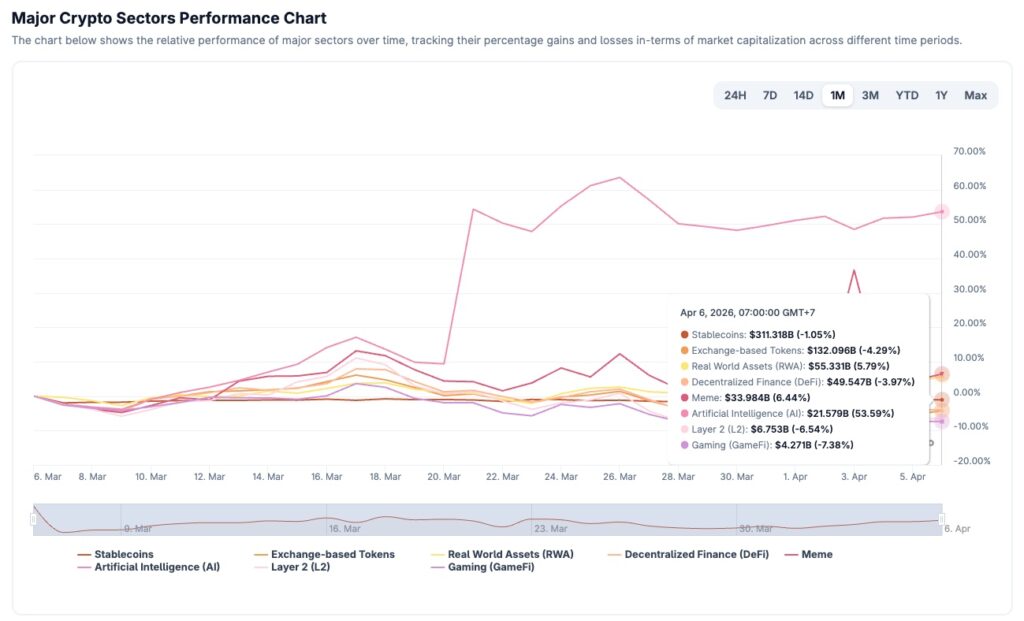
AI has become one of the dominating crypto categories in terms of market capitalization in the past month. This increase did not happen by chance, but was driven by various factors, especially the accelerated development of AI technology which is increasingly massive and its adoption is increasingly widespread in various sectors.
In that period, the market capitalization of the AI sector recorded an increase of 53.59%, making it the best performing category compared to other sectors such as Real-World Assets (RWA). Based on CoinGecko data, the market capitalization of this category is still dominated by large projects such as Chainlink with a value of around $6.3 billion, followed by Bittensor (TAO) with $2.9 billion at the time of writing. However, it should be noted that not all projects in this category have direct exposure to AI. Chainlink, for example, focuses more on oracle infrastructure, so the total market capitalization of the AI sector does not fully represent the value of AI-based projects.
On the other hand, the AI x crypto narrative is not a new phenomenon. In 2024, the sector experienced a significant spike, mainly driven by the trend of AI Agents, although at that time the global adoption of AI was not as great as it is now. This shows that price movements in the crypto sector do not always go hand-in-hand with the maturity level of the underlying technology.
When compared to current conditions, the development of AI technology is in a more advanced phase. Large technology companies are competing to develop AI agents that are capable of carrying out various tasks autonomously, including operating computers. However, interestingly, the price appreciation of crypto assets in the AI sector did not show a surge as big as the previous cycle.
One factor that could explain this phenomenon is the overall market conditions. The 2025-2026 period tends to be in a correction phase for many cryptocurrencies, limiting room for upside, including in the AI sector. In other words, while AI fundamentals and narratives continue to strengthen, price movements remain heavily influenced by broader market cycles.
From the sector dynamics discussed earlier, there are several projects that are worth a closer look, both in terms of fundamentals and price movements.
| Project Name | AI Subsector | Market Capitalization | Price Increase in the Last 1 Month |
| Bittensor | AI Compute | $3 billion | 64% |
| NEAR Protocol | AI & L1 Platform | $1.6 billion | 8,4% |
| Render Network | AI & DePIN | $1.05 billion | 36,70% |
| Artificial Superintelligence Alliance | AI Apps & Agents | $538 million | 61% |
The table above is a list of AI projects that have dominated in terms of price movements over the past month, in this article we will dissect the fundamental and technical reasons that catalyzed the increase.
1. Bittensor (TAO): Largest Decentralized AI
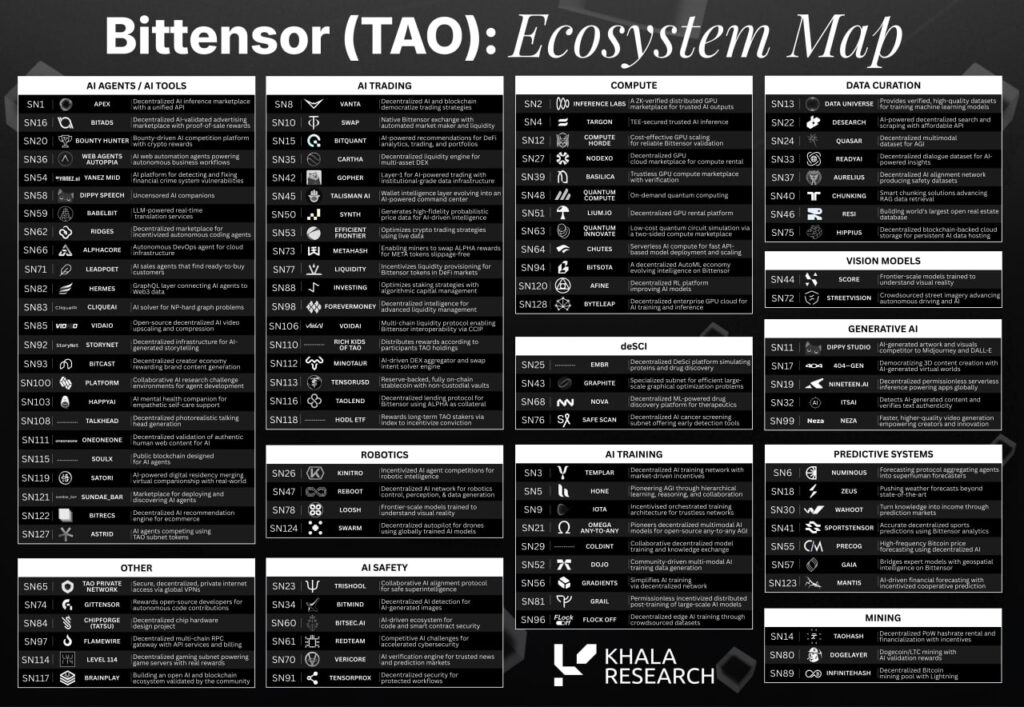
Bittensor is a project focused on a decentralized AI services marketplace ecosystem. It is an open-source platform where participants can produce various digital assets, including compute power, storage, AI inference and training, protein folding, financial market prediction, and more.
The ecosystem is structured in a system of subnets, where each subnet serves as an incentive-based marketplace for certain types of AI services. There are miners who produce the services, as well as validators who assess the quality of the output based on standards set by each subnet.
What Makes Bittensor Unique?
Bittensor has a token emission reduction mechanism that works automatically when the number of tokens in circulation reaches a certain threshold. When that condition is met, the rate of new token creation is immediately cut in half. This mechanism does not rely on any timelines or governance decisions and it is completely protocol-driven.
Interestingly, Bittensor does not have only one type of halving. There are two mechanisms that run independently, namely TAO Halving which applies at the overall network level, and Alpha Halving which applies at the level of each subnet separately.
Here is the mechanism of the Halving Bittensor:
1.TAO Halving
TAO Halving occurs when the total TAO that has been issued reaches a predefined threshold number. The impact is immediately felt throughout the network as the number of TAOs going into each subnet pool per block is halved.
One thing to understand is the recycling effect, when TAOs from subnet registration fees are returned to the emission pool, the number of TAOs in circulation is effectively reduced, making the time to reach the next halving threshold longer.
2. Alpha Halving
Alpha Halving works with similar logic but on a smaller scale. When a subnet’s total Alpha token issuance reaches its own threshold, the entire Alpha distribution to that subnet’s participants, miners, validators, and subnet owners, is halved equally. This means each subnet has its own halving cycle that runs independently from other subnets and from the TAO Halving.
Bittensor has a much more complex and layered halving mechanism, giving it a uniqueness that most other crypto AI projects lack. Bittensor’s first halving occurred in December 2025, cutting daily emissions from 7,200 to 3,600 TAO. This means that over time, fewer TAO assets will be in circulation, which could lead to scarcity.
Bittensor Adoption and Latest Updates
The Dynamic TAO released in early 2025 changed the structure of Bittensor, where each subnet now has its own Alpha token and can be invested in directly. This has seen Bittensor evolve into a network of hundreds of parallel-running AI markets with over 128 active subnets with use cases ranging from AI agents to deepfake detection tools.
Based on a report made by Grayscale Research, institutional participation began to appear through the emergence of subnet-based funds such as Yuma Asset Management and Stillcore Capital. In addition, Hippius became the first subnet token to list on CEX, while Grayscale filed a Form 10 with the SEC as the first step in bringing TAO exposure to traditional markets.
The combination of subnet growth, post halving supply dynamics, and institutional access are catalysts that Bittensor has responded positively to through its price movements over the past month. This marks Bittensor’s shift from a narrative to an ecosystem with a stronger structure and direction of development.
TAO Tokenomics
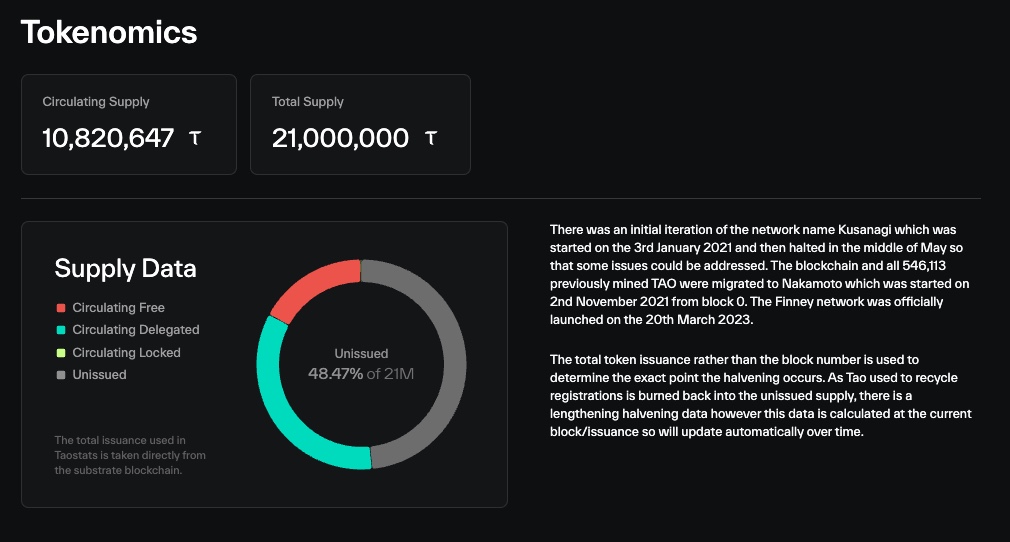
TAO does not use an unlock scheme like most crypto AI projects, as supply is regulated through a scheduled halving mechanism. However, there is still a daily emission which has been reduced to around 3,600 TAO minted per day.
Based on data from taostats, the circulating supply of TAO is 10,820,647 TAO or equivalent to 51.53% of its total supply and will continue to grow daily based on tokens minted with a fixed amount until the next halving occurs.
| Halving | Halving Date | Block Reward | Token Circulation |
| First Halving | December 15, 2025 | 0.5 TAO | 10.5000.000 |
| Second Halving | December 12, 2029 | 0.25 TAO | 15.750.000 |
| Fourth Halving | December 10, 2033 | 0,125 | 18.375.000 |
| Fifth Halving | December 7, 2037 | 0,0625 | 19.687.500 |
TAO Technical Analysis
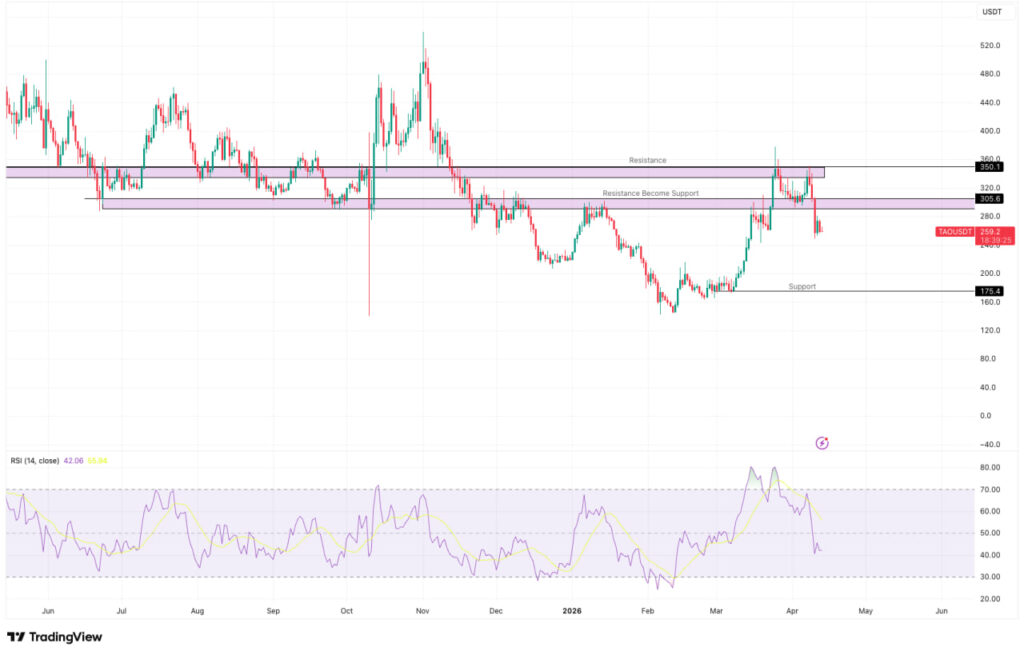
TAO showed a fairly strong price bounce post-correction. Structurally on the daily chart, TAO is undergoing a correction of more than 19% after retesting the resistance level at $350.1 several times on different timeframes. On April 13, 2026, TAO’s price movement on a daily technical basis was quite bearish based on the failure to maintain support at $292-305.6.
Support Level: $175,4
Resistance Become Support: $292.6-$305.6
Resistance Level: $305,1
The RSI is at 42.06 with the RSI MA at 55.95, the RSI line has cut its MA downwards. The decline from the overbought area (~80) in March to near the 30 level in a relatively short period of time shows that the previously strong momentum has started to subside.
2. NEAR Protocol (NEAR): Blockchain for AI with High Privacy Based on TEE
NEAR Protocol was originally known as one of the Layer 1 blockchains that focused on transaction speed and user-friendliness. Over time, NEAR innovated with a different strategy, positioning its project as a blockchain built specifically to support the AI ecosystem.
In this innovation, NEAR uses a technology called Trusted Execution Environment (TEE) to maintain data privacy, every AI inference request is executed in an isolated ecosystem where data remains encrypted, even from cloud providers. This approach provides a solution to a problem that is often a major barrier to AI adoption, namely data security and privacy.
What Makes Near Protocol Unique?
NEAR Protocol was originally developed as a Layer 1 blockchain. Interestingly, when entering the AI ecosystem, NEAR did not drastically change the direction of the project, but rather utilized the existing infrastructure as a foundation for building AI products.
This approach can be seen in its product development. From general-purpose blockchain, NEAR now presents AI product lines such as IronClaw and Confidential GPU Marketplace, which are still built on the same infrastructure.
In addition, NEAR actively introduces its innovations through events such as NEARCON, with product launches directly to the community and developers. The combination of adaptability, infrastructure continuity, and community engagement is a key differentiator compared to many other crypto AI projects.
Latest Adoption and Update of Near Protocol
1.AI Agent Framework
NEAR AI launched IronClaw in February 2026, an open-source AI agent built on an encrypted TEE infrastructure. IronClaw comes as an evolution of OpenClaw, with the main difference being that security is prioritized at the hardware level.
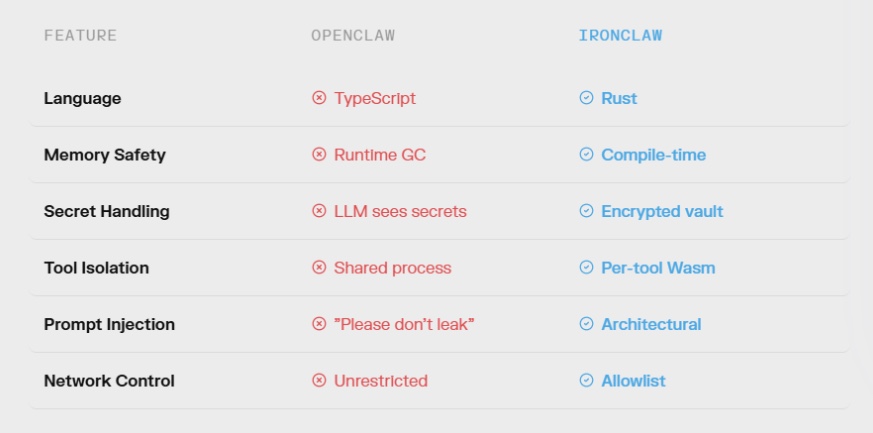
Compared to OpenClaw, IronClaw comes with a number of fundamental technical differences. Built using the Rust language, which is known for its advantages in memory safety at the compilation stage, IronClaw replaces OpenClaw’s TypeScript approach that still relies on automatic memory cleanup while the program is running.
By design, IronClaw is more secure than OpenClaw because each tool works in its own section, confidential information is stored in an encrypted system so that AI models cannot access it, and network access is limited to authorized connections.
2. Confidential GPU Marketplace
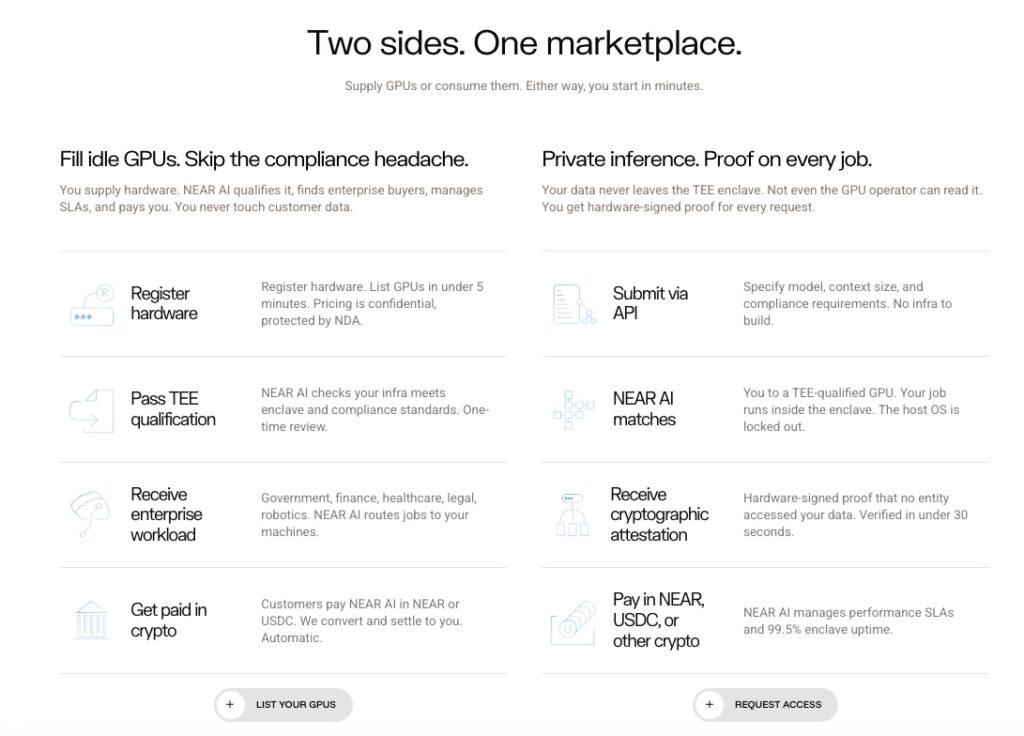
NEAR AI also launched another product alongside IronClaw, the Confidential GPU Marketplace, a TEE-secured GPU computing network. This marketplace is a direct bridge between GPU providers and customers who need secure and private AI data processing.
This service is specifically designed for needs that emphasize full privacy in AI data processing. Data is encrypted in a special hardware enclave so that it cannot be accessed by anyone, including the GPU provider or NEAR AI itself as a platform.
Tokenomics NEAR
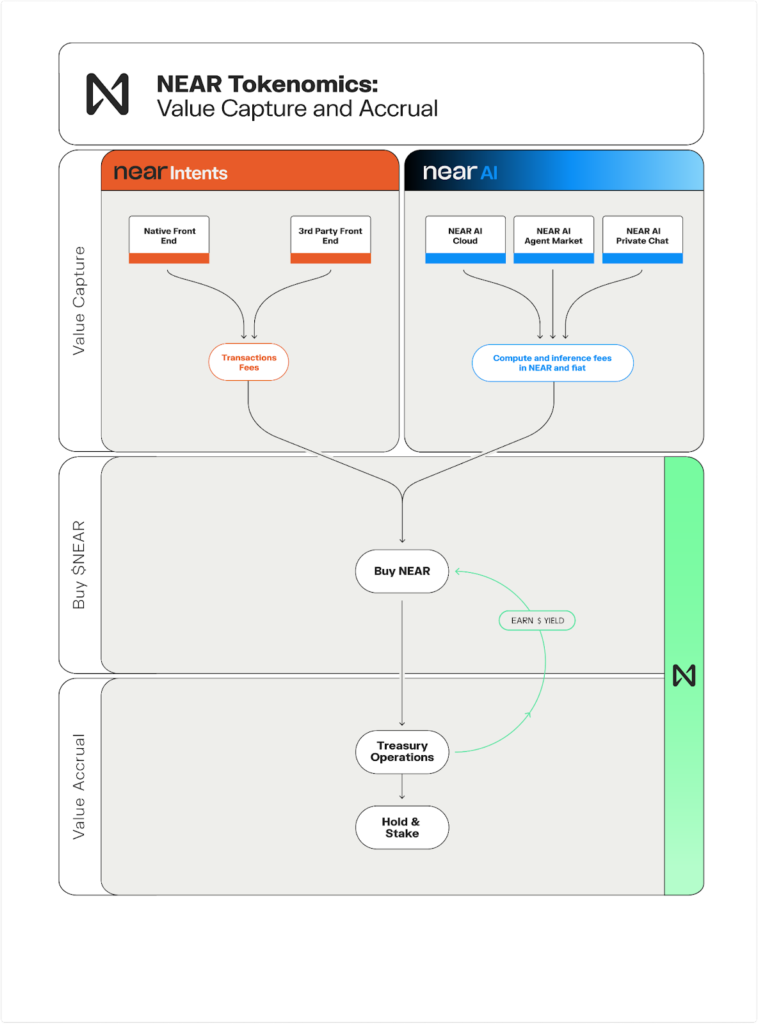
NEAR tokens do not have an unlock schedule because the entire supply is already fully in circulation. The following NEAR token functions are summarized into three parts:
- Settlement Layer: NEAR tokens are used to settle transaction payments across blockchain networks and ecosystem economic models for AI-based applications.
- Instruments of Value from Products: NEAR builds its own product line so that the revenue generated goes back to strengthening the ecosystem directly. The result is seen in a $1 million token buyback of the revenue its products generate.
- Governance: NEAR token holders have voting rights to determine the use of revenue from NEAR products or the direction of future project development, from token buybacks, to supply management strategies.
NEAR Technical Analysis
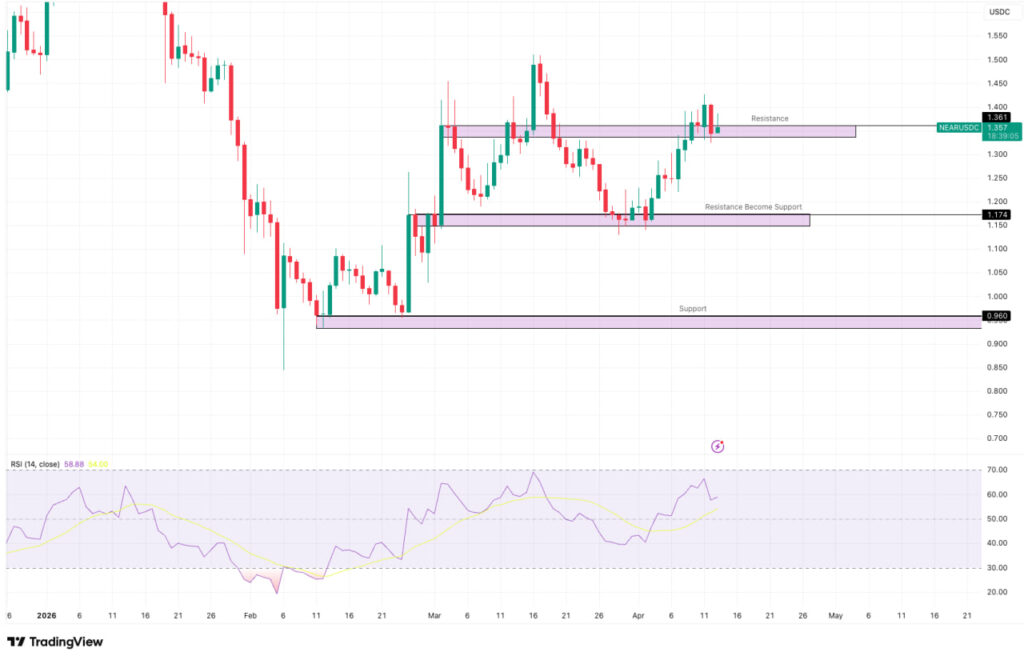
NEAR is currently in the range of $1,357 after being held back at the $1,361 resistance, a level that has been tested several times and has consistently been an area of rejection. Previously, the price had rebounded more than 19% in 9 days from $1,174, but a quick rejection occurred at $1,361. To avoid a potential false breakout, NEAR needs to break the resistance strongly with significant volume support.
Support Level: $0,960
Resistance Become Support: $1,174
Resistance Level: $1,361
From this structure, there are two main scenarios: if the price is able to close the daily candle above $1,361 with high volume support, the potential for bullish trend continuation is still open. Conversely, if the $1.174 support fails to hold, then $0.960 becomes the next major support level to observe.
3. Render Network (RENDER): Decentralized GPU Infrastructure for the Age of AI and Digital Content
Render Network is a project that connects creators(clients) with GPU owners in one decentralized ecosystem. Through this platform, creators can render content such as high-resolution images and videos without burdening their own devices.
GPU owners act as operator nodes, providing computing power to process rendering jobs. In return, they receive $RENDER tokens every time they complete a task from the client.
Learn more about Render Network at Pintu Academy - What is Render Network (RNDR)? Blockchain-based Rendering Service
What Makes Network Rendering Unique?
Render Network is a solution for clients who have limited devices in working on 3D rendering processes, which generally require high specifications and long computing time.
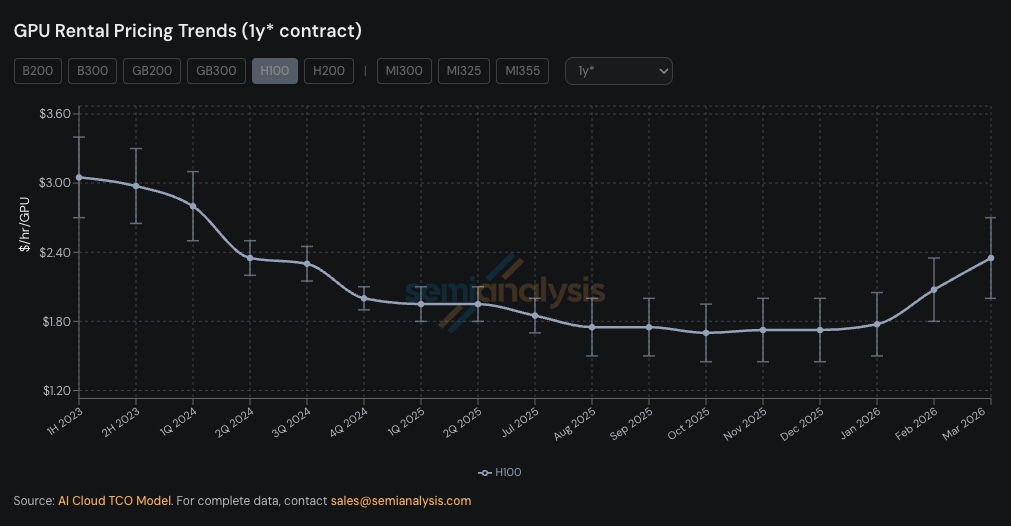
On the other hand, GPU as a semiconductor-based component is increasingly needed as the rapid development of AI also drives GPU demand. The latest data from Semianalysis shows that GPU rental prices have increased again since early 2026, reaching around $2.35 per hour for a 1-year contract on the NVIDIA H100. These GPUs are commonly used for AI training and various high-performance computing jobs.
In this context, Render Network offers a more efficient alternative service by providing access to computing power according to client needs, without having to own devices or incur more expensive GPU rental costs with complicated processes because everything is done digitally.
The Render Network system will sort the jobs submitted by the client based on the level of complexity, and then match them with the most suitable GPU specifications to process the jobs.
The delegation of work to operator nodes is customized according to the service selected by the client, which is classified in several levels or Tiers:
- Tier 2: If the client chooses Tier 2, the work will be done by verified operator nodes and is also specialized for clients who require heavy and faster work processes.
- Tier 3: A lower-cost service, intended for simpler jobs that do not have strict deadlines.
This service is relevant to a wide range of professionals in various industries, not limited to the creative sector. In addition to rendering, the platform can also be used in AI training, such as converting photos into 3D objects, as well as creating visualizations for various needs, such as building architecture or concepts.
Tokenomics RENDER
After the client receives and approves the work results from the operator node, the service fee will be allocated by a certain mechanism:
- 95% is used to buy back RENDER tokens on the market and are permanently removed from circulation.
- The remaining 5% is allocated to the Render Foundation as a service fee.
Operator nodes will receive the cost of the work performed in the form of RENDER tokens from the emission of newly minted RENDER tokens instead of the previously mentioned allocation.
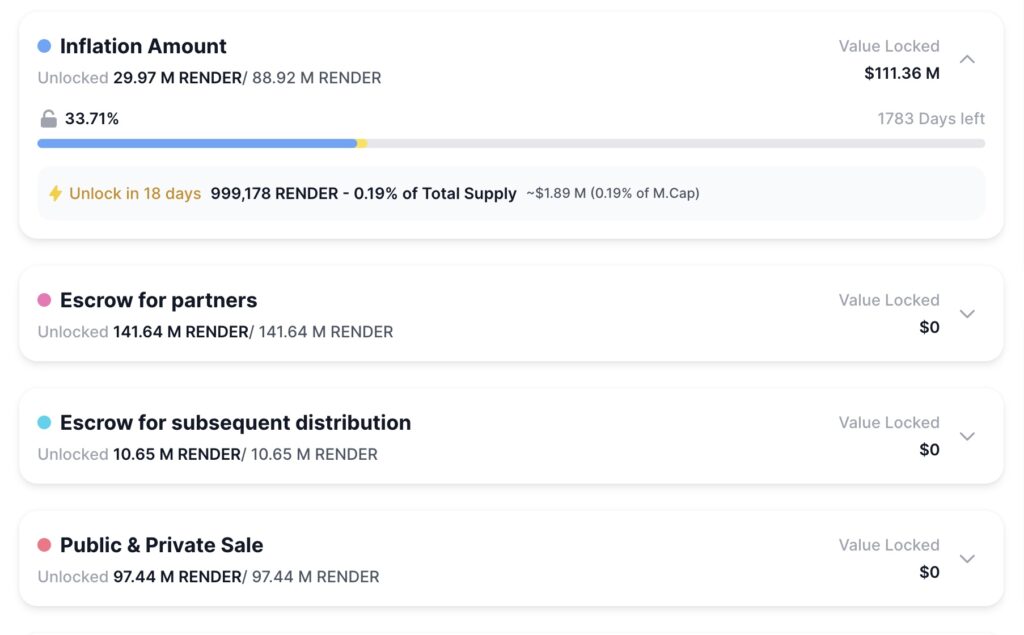
Based on data from DropsTab, the total supply of RENDER tokens is recorded at 644,245,094, with approximately 518.74 million tokens already in circulation or equivalent to approximately 80% of the total supply. The remaining distribution is done through an unlock mechanism of approximately 999,178 tokens per month until March 2031.
This unlock allocation comes from an additional token amount of 88.92 million RENDER with a total of 29.97 million already in circulation and the remainder still locked at a value of $111.36 million based on the price on April 13, 2026.
RENDER Technical Analysis
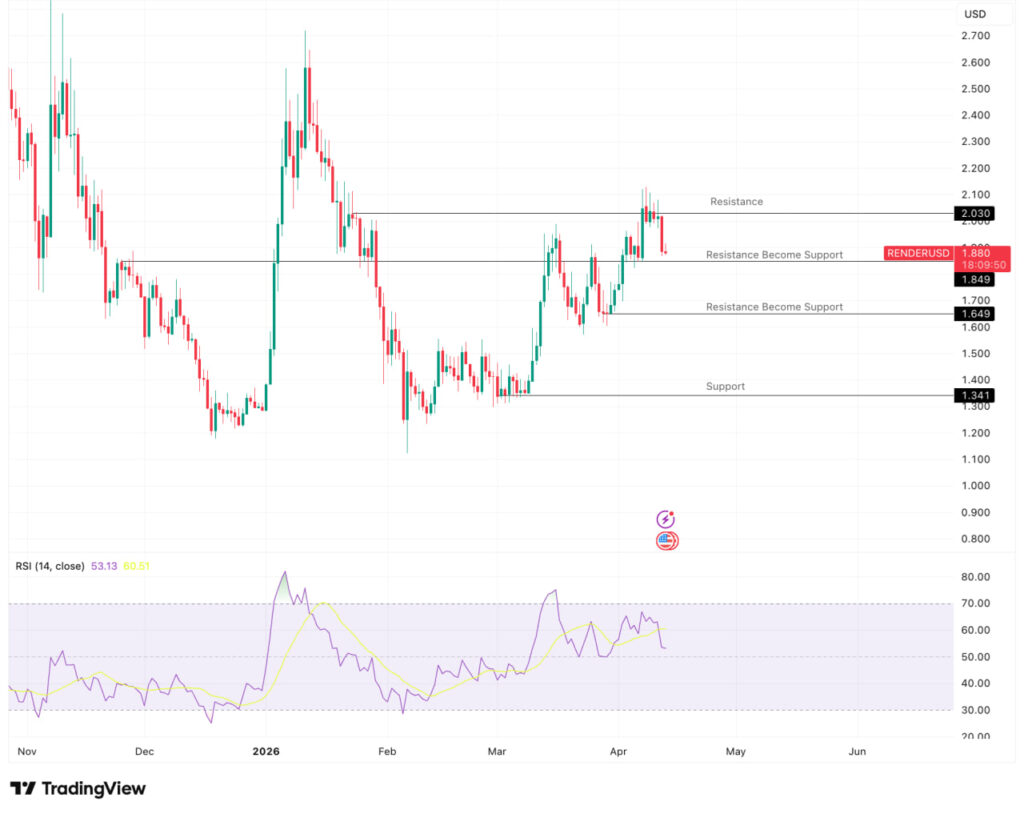
The price of RENDER experienced a rejection at the resistance level of $2,030 after several days of consolidation in that area. The nearest support is at $1,849, which is a crucial level to test.
Support Level: $1,341
Resistance Become Support: $1,649 & $1,849
Resistance Level: $2,030
A retest in this area will determine the next direction which if able to hold, the short-term bullish structure could be maintained with a potential reattempt to the resistance level. Conversely, if the breakdown, the price has the potential to continue its correction to the next support at $1,649, even towards the main support level at $1,341.
4. Artificial Superintelligence Alliance (FET): Merger of 3 AI Crypto Projects

ASI Alliance is a collaboration of three decentralized AI projects namely Fetch.ai (FET), SingularityNET (AGIX), and Ocean Protocol (OCEAN) with an ecosystem under one shared token FET. In this combination, Fetch.ai serves as the technical foundation by building a blockchain network specifically designed for AI, allowing autonomous agents to operate, interact, and complete tasks autonomously without constant supervision.
The merger of the 3 projects is motivated by the forces in the global AI industry that are dominated by a handful of large technology companies in 2026. Through this collaboration, the three projects seek to create a more open alternative by combining technology, community, and liquidity into one more integrated and competitive ecosystem.
What Makes the Artificial Superintelligence Alliance Unique?
The main uniqueness of this merger lies not in one specific technology, but in the integration of three complementary capabilities in one ecosystem. One component focuses on data management, allowing sensitive data to be utilized to train AI without having to change ownership.
Another component presents a network of autonomous agents capable of performing various tasks autonomously in the real world. Meanwhile, the third part develops cognitive architectures that aim to go beyond conventional AI models towards more adaptive and reasoning systems.
What sets this alliance apart from other AI projects is the presence of all three elements in one framework, where data, computing, and intelligence are interconnected without relying on one centralized entity controlling the entire process.
FET Tokenomics
One of the unusual things about this project is that it unites 3 Crypto x AI projects at once into 1 own token model, FET. The total tokens in circulation after this merger reached 2.63 billion tokens, consisting of the contribution of each project calculated based on the proportion of their respective valuations.
FET tokens are fully in circulation by 2026 and no tokens are locked. Here’s what FET tokens are used for in the Artificial Superintelligence Alliance ecosystem:
1.Service-wide Transaction Tools
All services in the Fetch.ai, SingularityNET, and Ocean Protocol ecosystems, from the use of AI agents, access to machine learning models, to the consumption of data from the Ocean marketplace, use a single token, FET, as the main transaction tool. Thus, this token serves as a hub for activities across the various services in the project’s ecosystem.
2.Incentives Within the Ecosystem
In its whitepaper document, the project emphasizes a philosophy in line with Bitcoin’s incentive mechanism, where any contribution to the network can be rewarded in the form of tokens. Such contributions include training AI models, providing data, operating AI agents, and providing decentralized computing.
3.Incentives for Providing Decentralized Computing
One of the main challenges in building decentralized AI is to encourage the participation of computing resource providers, such as GPUs and CPUs, without coordination from a centralized entity. The solution lies in a token-based incentive mechanism, where each contributor who provides computing power will be incentivized.
FET Technical Analysis
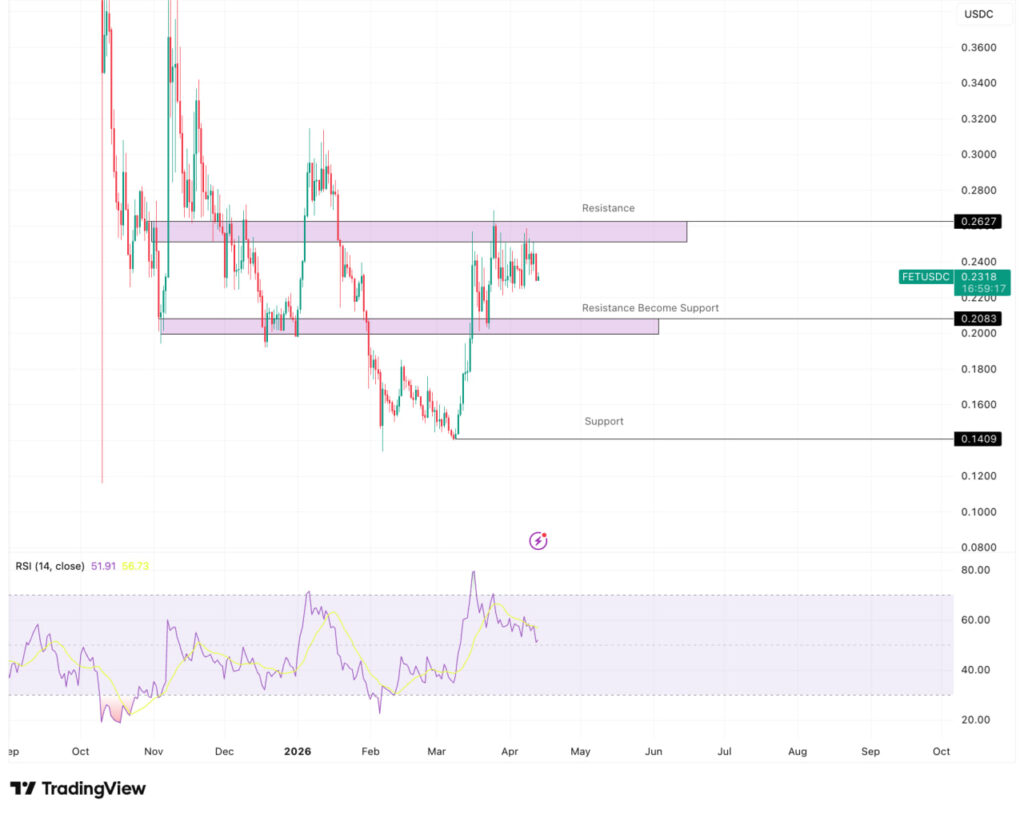
FET is at $0.2318, between two important levels where it has broken the resistance area which is now support at $0.2083, but has not been able to reach resistance at $0.2627. Technically, this position is often referred to as no man’s land, where the price has moved away from the support but has not confirmed the strength to break the resistance.
Support Level: $0.1409
Resistance Become Support: $0.2-$0.2083
Resistance Level: $0,2627
Interestingly, it rebounded from $0.1409 to a relatively strong level. However, after touching $0.2627 in late March to early April, the price experienced a rejection and is now consolidating around $0.23. This pattern indicates a potential failed breakout or retest phase before determining the next direction.
Conclusion
Bittensor, NEAR Protocol, Render Network, and Artificial Superintelligence Alliance each offer different approaches and characteristics in the development of their AI ecosystems. While the artificial intelligence narrative in the crypto sector appears very strong throughout 2024 to early 2025, investors need to be aware that asset price increases in any given narrative are often fraught with uncertainty. Such movements are heavily influenced by factors such as market sentiment, liquidity, hype, fundamentals, as well as other factors.
Disclaimer: All information presented in this article has been prepared for general educational and informational purposes. This content is not intended as investment advice, recommendations, solicitation to buy or sell certain crypto assets, nor the basis for financial decision making. Any investment decision is entirely the responsibility of the reader, taking into account their financial condition, investment objectives, and risk tolerance.
How to Buy TAO, NEAR, RENDER, and FET Tokens in Pintu
After knowing some potential assets worth monitoring, you can start investing in TAO, NEAR, RENDER, and FET tokens and others directly through Pintu. In addition, on Pintu Pro Web, you can also directly trade Futures!
- Create a Pintu account and follow the process of verifying your identity to start trading.
- On the homepage, click the deposit button and top up your Pintu balance using your preferred payment method.
- Go to the market page and search for your favorite asset!
- Click buy and fill in the amount you want.
- Now you have crypto assets!
Download Pintu crypto app on Play Store and App Store! Your safety is guaranteed because Pintu is regulated and supervised by Bappebti and Kominfo.
Reference
- Will Ogden Moore & Zach Pandl,“Introducing the Artificial Intelligence Crypto Sector“. Grayscale, accessed on April 6, 2026.
- 0xSammy, haitzu, Alex Kazoh, and Lemz, “BITTENSOR: THE INTELLIGENCE OLYMPICS “, KHALA RESEARCH, accessed on April 6, 2026.
- Will Ogden Moore, “Bittensor on the Eve of the First Halving“, Grayscale, accessed April 7, 2026.
- Bittensor Documentation – https://docs.learnbittensor.org/
- NEAR AI, “NEAR AI Launches IronClaw, Confidential GPU Marketplace, and Multimodal Confidential Inference“, NEAR AI, accessed on April 8, 2026.
- NEAR, “Evolving NEAR Tokenomics“,NEARBlog, accessed on April 8, 2026.
- Render Network Whitepaper Document – https://renderfoundation.com/whitepaper
- Artificial Superintelligence Alliance Vision Paper – https://docs.superintelligence.io/artificial-superintelligence-alliance/vision-paper