
In the past week, global financial markets experienced significant volatility shocks. The main trigger was the escalation of military conflicts involving the United States, Israel, and Iran. However, the crypto market remained stable. Bitcoin finally managed to reach $73,000, and several altcoins closed with weekly gains above 20%.
Iran Conflict Situation
- Global Energy Crisis: The aftermath of this conflict was Iran’s effective closure of the Strait of Hormuz, a crucial passage through which about 20% of the world’s oil and liquefied natural gas (LNG) supplies pass. This triggered a surge in Brent crude oil prices to breach the $100 per barrel level.
- Stock Market Weakness: The surge in energy prices triggered renewed fears of prolonged global inflation and dashed hopes of a benchmark interest rate cut. Global stock indices such as the S&P 500, Dow Jones, and Asian markets such as the Nikkei and KOSPI experienced sharpsell-offs.
- Crypto Resilience: Interestingly, amidst the equity market panic, the crypto market is showing an anomaly. Bitcoin (BTC) and other major cryptocurrencies have shown remarkable resilience, reversing course and being positioned by some investors as an alternative safe-haven asset amid geopolitical uncertainty.
Macroeconomic Update
US economic data showed February CPI at 2.4% YoY (lowest in 4+ years), which gave a dovish signal for the Fed, but revised GDP and disappointing February employment data fueled speculation of an early rate cut.
However, the FOMC meeting on March 18 is likely to keep rates at 3.50-3.75%, with a dot plot that could revise expectations of cuts through 2026.
This keeps BTC ahead of indices like the Nasdaq, which fell due to geopolitical tensions, indicating crypto’s partial decoupling from traditional assets.
Overall, the negative influence of high oil and potential inflation (from the Iran conflict) suppressed risk sentiment, but BTC ETF inflows (+$450M in 3 days) and price resilience showed that crypto is still considered a hedge against macro uncertainty.
If oil remains high, bearish pressure could continue, but dovish Fed signals could encourage a rally.
Bitcoin and Ethereum Analysis
The crypto market experienced a volatile week at the end of February 2026, with Bitcoin (BTC) briefly touching a yearly low of around $62,900 before rebounding to the $65,000-$66,000 range. Total crypto market capitalization was stable at around $2.1 trillion, while the Fear & Greed index remained at “Extreme Fear” (11).
Nevertheless, at the end of last week and the beginning of this week, the crypto market showed a relief rally: BTC rose by up to +10%, Ethereum (ETH) +12.45%, and Solana (SOL) surged +13.31%. The crypto market is seen to start showing gains amid falling gold prices. This suggests a potential flow of funds into alternative safe havens.
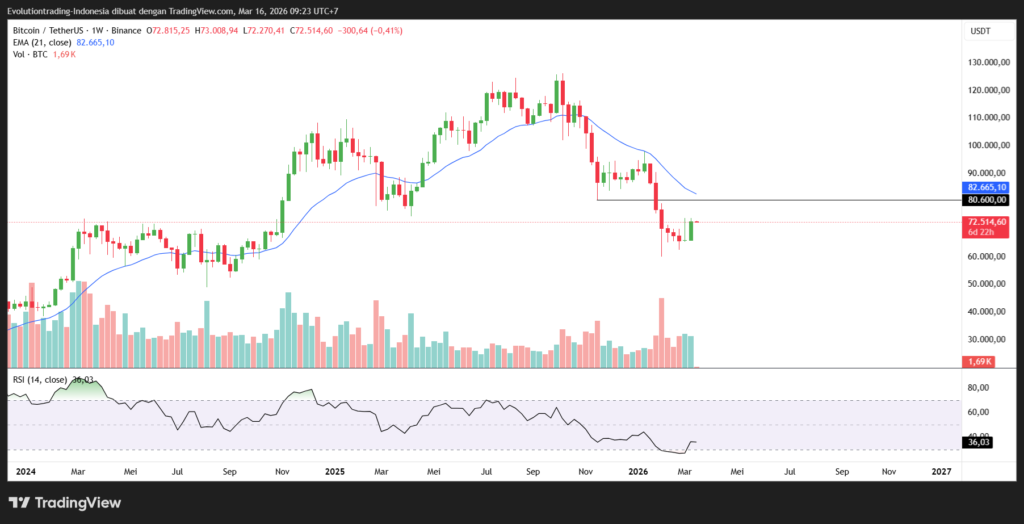
For the first time in 2026, BTC closed a weekly candle with a bullish candle forming after experiencing a 10% increase last week. If it manages to hold above $72,000, there is potential for a serious reversal for Bitcoin.
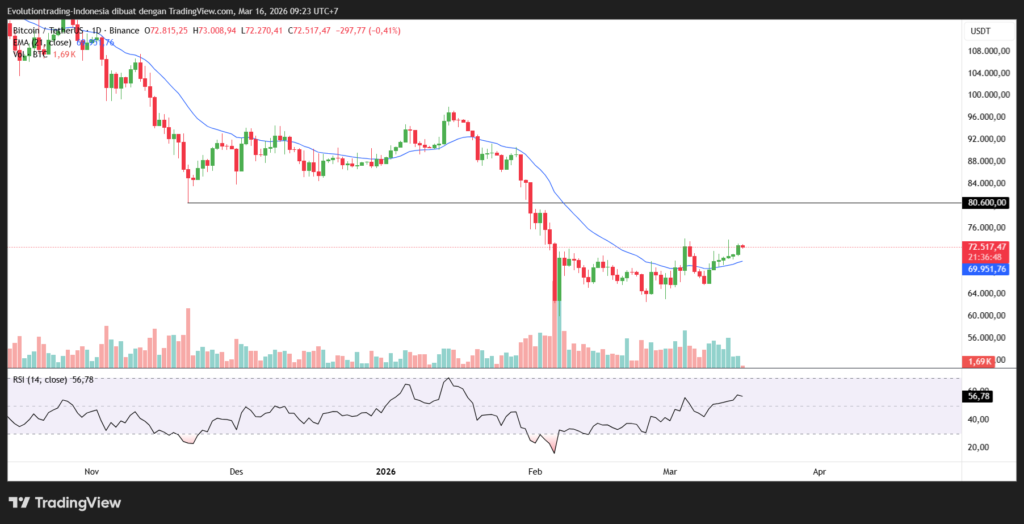
Structurally, Bitcoin could experience a rise up to the $80,600 level which is the previous strong support and resistance.
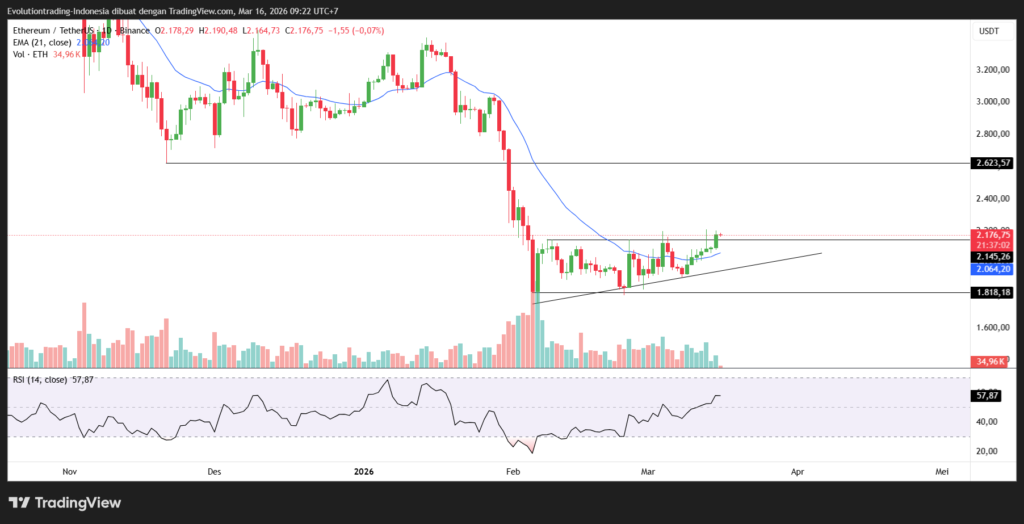
Ethereum is also showing positive momentum as it managed to break out from key resistance at the level of $2,154 and now has the potential to test the support become resistance level at $2,638.
Macroeconomic Calendar
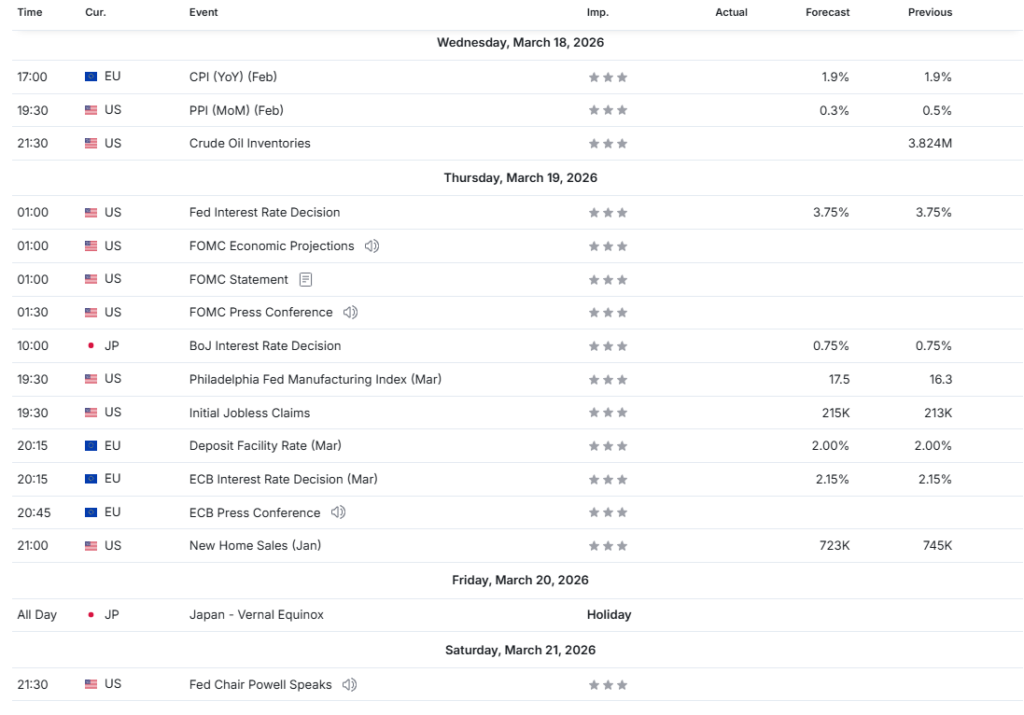
This week with some important economic reports in the US: PPI on Wednesday, Interest Rate Decision and FOMC on Thursday (early morning Indonesian time), Initial Jobless Claim, and Fed Chair Powell’s Speech on Saturday, March 21, 2026.
Conclusion
Last week crypto showed its resilience compared to traditional asset markets and this week, a rally is predicted for crypto. However, remain vigilant especially with many uncertainties related to the Iran war still happening