
As we enter the mid-2026s, the Bitcoin vs quantum computing debate has transformed from science fiction to a crucial issue for core developers and global investors. Before diving into the technical risks, it’s important to brush up on the basics of what Bitcoin is to see how the encryption system works to protect the value of the asset.
Following Google’s recent claim that quantum computers can break into cryptographic systems faster than expected, the crypto community is now focusing on developing quantum-resistant algorithms to maintain the integrity of Bitcoin treasuries as backup assets for large institutions. Understanding the close relationship between cybersecurity and these future technological innovations is key to navigating the increasingly complex and challenging cryptocurrency market.
Article Summary:
💻 Quantum Computing is a future computer technology that uses qubits to process data thousands of times faster than current supercomputers.
⚠️ Bitcoin is threatened by quantum computers because the Elliptic Curve Digital Signature Algorithm (ECDSA) can theoretically be cracked if quantum technology reaches millions of qubits.
🛡️ Network Upgrades via Post-Quantum Cryptography (PQC) are being prepared by developers like Andrew Poelstra and Pieter Wuille to make Bitcoin quantum-safe before the threat becomes real.
🔒 Bitcoin Holders can reduce quantum risk today by avoiding address reuse and always using a new wallet address for every transaction.
What is Quantum Computing and its Relationship to Bitcoin?
Before dissecting the threat, it is important to understand what quantum computing is. Unlike classical computers that use bits (0 or 1), quantum computers use qubits that allow simultaneous processing of data through the phenomena of superposition andentanglement. Quantum technology has the ability to solve complex mathematical calculations in seconds (supercomputers now take thousands of years).
So, what does Bitcoin have to do with quantum computing? The connection lies in the cryptographic algorithm that Bitcoin uses to secure transactions and wallet addresses. If a powerful enough quantum computer were to be developed, it could potentially crack the private keys that protect users’ funds.
How is Bitcoin Secured Today?
To understand how real the threat of quantum computing is to Bitcoin today, we must look at how bitcoin is secured today. Bitcoin’s security rests on two main pillars:
- Hashing Algorithm (SHA-256): Used in the mining process to secure the network through Proof of Work consensus.
- Elliptic Curve Digital Signature Algorithm (ECDSA): Used to generate a public key from a private key, ensuring that only authorized owners can send Bitcoin.
Technically, SHA-256 is considered quite resistant to quantum attacks (requiring Grover’s algorithm which only provides a square root speedup). However, ECDSA is highly vulnerable to Shor’s algorithm which can easily dissect the relationship between the public and private keys.
Can Quantum Computers Crack Bitcoin?
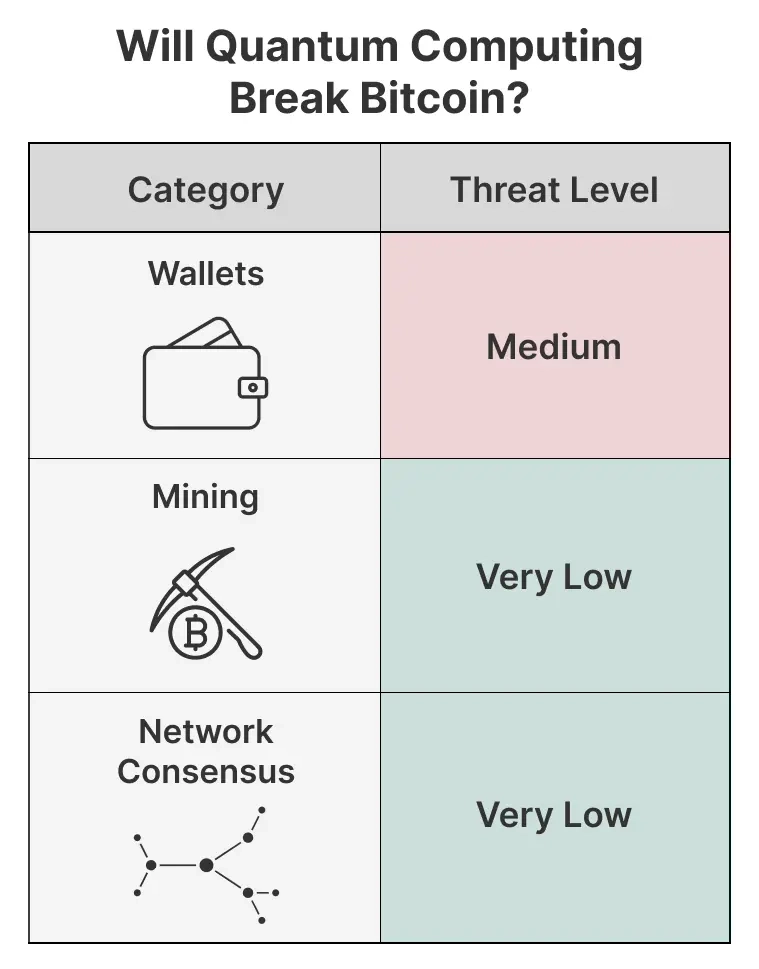
Theoretically, the answer is yes, but with a big technical caveat. A quantum computer would need millions of stable,error-corrected qubits to crack Bitcoin’s ECDSA key.
As of 2026, although rapid progress has been made, existing quantum computers are still on an experimental scale and have yet to achieve a sufficient “quantum edge” for a full-scale attack. However, the impact of quantum computing on Bitcoin’s price and market sentiment remains pronounced, with any news of quantum advancements often triggering short-term volatility due to investor fear.
Getting to know Quantum-Resistant Bitcoin and Post-Quantum Cryptography
Many projects in the crypto industry are developing what is known as quantum-resistant Bitcoin. The ultimate solution is to switch to post-quantum cryptography (PQC).Post-quantum cryptography (PQC) is a new mathematical algorithm designed to be unbreakable by even the fastest quantum computers.
The community and teams developing Bitcoin will be under pressure to quickly implement PQC and quantum-safe Bitcoin as many countries, large companies, and institutions own Bitcoin. Based on data from BitcoinTreasuries, as of April 17, 2026, state entities held 649 thousand BTC, public companies 1.1 million BTC, and ETFs held around 1.7 million BTC.
The good news is that the developer community is exploring whether bitcoin can upgrade to post-quantum cryptography. This upgrade would most likely be done through a soft fork or hard fork that introduces a new address type that uses quantum-resistant signatures (such as lattice-based cryptography).
Quantum-Safe Bitcoin Adaptation and Innovation Opportunities
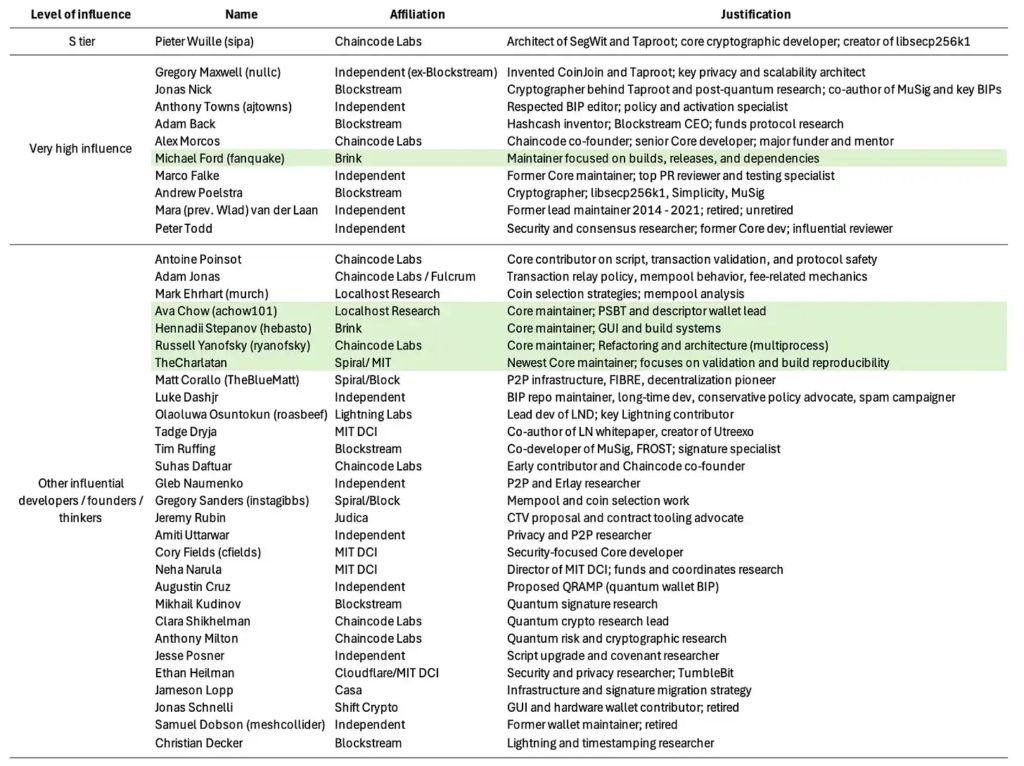
Despite Google’s claim that quantum computers can break encryption, Bitcoin (BTC) has a natural shield in its P2PKH (Pay-to-Public-Key-Hash) address that hides the public key until a transaction is made. Blockstream Research’s team of experts, led by cryptography experts such as Andrew Poelstra and Pieter Wuille, continues to work on Post-Quantum Cryptography (PQC) technology through the Schnorr signature innovation. The efforts of this elite team are crucial to ensure that the decentralized financial system remains a digital fortress that is not easily penetrated by even the most sophisticated machines.
However, a recent report by Nic Carter reveals that Bitcoin’s (BTC) biggest threat is not technological sophistication, but a failure of community coordination as every system update requires consensus from millions of miners and developers. The inability to unify in choosing a new algorithm could trigger a network split(hard fork). Carter said that human ego and the difficulty of reaching consensus in the crypto ecosystem is far more dangerous than the threat of quantum computers, as it can freeze the process of urgent security updates.
How Bitcoin Holders Reduce Quantum Risk

For you as an investor, how does a Bitcoin holder reduce quantum risk? The simplest step right now is:
- Use a New Address for Every Transaction: Do not reuse the same address after sending, as the address’s public key will be exposed to the network.
- Use Cold Storage: A hardware wallet that is not connected to the internet provides an additional layer of security.
- Monitor Network Updates: Keep up to date with Bitcoin software upgrades that may introduce new security features.
Conclusion: Bitcoin’s Adaptability Amid the Quantum Revolution
Overall, although quantum computing is a real challenge in the future, this threat is not the end for Bitcoin. History has proven that Bitcoin is a protocol capable of evolving in the face of any technical challenge. With the development of post-quantum cryptography and high community awareness, Bitcoin has a great opportunity to transform into a quantum-safe network before quantum computers reach functional maturity. For you, the key is to stay educated and follow the best security practices in managing digital assets.
Disclaimer: All articles from Pintu Academy are intended for educational purposes and do not constitute financial advice.FAQ
1. What are the Risks and Threats of Quantum Computing to Bitcoin?
The main threat is the ability of Shor’s algorithm to break ECDSA encryption, which allows an attacker to find the private key from the public key and drain the funds.
2. How Many Qubits Does It Take to Destroy Bitcoin?
It is estimated that it takes about 10 to 317 million physical qubits (depending on the error correction rate) to crack an ECDSA key in a reasonable time.
3. Can Bitcoin be Hacked by Quantum Computing?
It is technically possible in the future, but the Bitcoin network can be upgraded with new cryptographic algorithms that are resistant to quantum attacks.
4. How Long Can Quantum Computing Really Threaten Bitcoin?
Predictions vary between 10 to 30 years. However, recent reports in 2026 suggest accelerating technology might shorten that time window to less than a decade.
5. Can Quantum Computing beUsed for Bitcoin Mining?
They can, but quantum computers will only provide square root efficiency improvements (via Grover’s algorithm), meaning classic miners with ASICs will still remain competitive for a very long time.
Reference
- Deloitte. Quantum computers and the Bitcoin blockchain. Accessed April 15, 2026.
- Forbes. Google Finds Quantum Computers Could Break Bitcoin Sooner Than Expected. Accessed April 15, 2026.
- Nic Carter. Bitcoin developers are mostly not concerned about quantum risk. Accessed April 17, 2026.